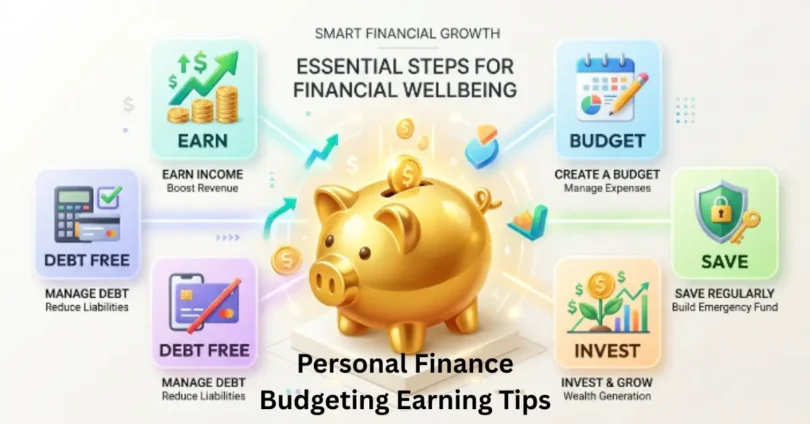
Personal finance is an important part of everyday life because it helps people manage their money in a smart way. When a person understands budgeting, earning, and saving, they can control their expenses and improve their financial future. Simple money habits like tracking income, planning a budget, and finding extra earning opportunities can make a big difference over time. “Personal Finance Budgeting Earning Tips” focuses on teaching easy and practical ways to handle money, so anyone can build a stable and stress-free financial life.
Personal Finance Basics and Money Mindset
Personal Finance starts with understanding how money works in daily life. It is not only about earning money but also about how you think and behave with it. A strong money mindset helps a person make better decisions, avoid wasteful spending, and focus on saving for the future. When someone learns basic financial habits like controlling expenses, planning income, and setting clear goals, they can build a stable and stress-free life. Good money thinking is the first step toward financial success.
Income Sources and Earning Opportunities
Income is the main part of financial life, and having more than one earning source can improve stability and growth.
- Main job salary is the most common and stable income source
- Freelancing work like writing, design, or digital skills
- Online earning methods such as blogging, YouTube, or affiliate marketing
- Small business ideas like selling products or services
- Part-time work for extra monthly income
- Skill-based work like tutoring, coding, or graphic design
- Passive income from investments or digital assets
Multiple income sources help improve financial security and make life more stable and independent.
Smart Budget Planning for Daily Life
Smart budget planning helps you manage your daily income and expenses in a simple and balanced way.
- A budget is a simple plan that helps you control your money and avoid extra spending
- It divides your income into needs, savings, and personal wants for better balance
- Daily life expenses like food, transport, and bills should be planned first
- Always set a fixed amount for savings before spending on anything else
- Tracking every expense helps you understand where your money is going
- Using a simple notebook or mobile app can make budgeting easier
- Avoid unnecessary purchases by checking if the item is really needed
- Monthly review of your budget helps you improve your spending habits
- A good budget gives you financial control and reduces money stress
- Smart planning helps you save more and manage life expenses easily
Good budget planning makes daily life easier and helps you stay financially stable.
Saving Strategies for Financial Stability
Saving money is an important habit that helps you stay financially strong and prepared for future needs.
- Always save a fixed percentage of your monthly income
- Build an emergency fund for unexpected expenses
- Avoid unnecessary spending on non-essential items
- Use automatic savings if possible to stay consistent
- Save small amounts daily to build long-term wealth
- Keep savings separate from daily spending money
- Set clear savings goals like travel, education, or investment
- Reduce wasteful habits like impulse shopping
- Track your savings progress every month
- Start saving early to gain better financial stability
Good saving habits create financial security and help you handle future problems with confidence.
Expense Control and Smart Spending Tips
Controlling expenses is very important for managing money wisely and avoiding financial stress in daily life.
- Always separate needs from wants before spending money
- Make a monthly spending limit and follow it strictly
- Avoid emotional shopping and unnecessary purchases
- Compare prices before buying any product or service
- Use discounts and offers only on needed items
- Track daily expenses to understand spending habits
- Avoid buying things just because others are buying them
- Plan your shopping in advance to reduce wasteful spending
- Cut down extra costs like unused subscriptions or services
- Focus on value instead of cheap or expensive choices
Smart spending and expense control help you save more money and build a stable financial future.
Expense Control and Smart Spending Tips
Expense control helps you manage your money wisely by planning your spending and avoiding unnecessary costs.
- Expense control means managing your money in a way that avoids waste and improves savings
- Always plan your spending before making any purchase
- Focus only on important needs like food, bills, and education first
- Avoid buying unnecessary items that do not add real value to your life
- Compare prices in different shops or online stores before buying anything
- Set a fixed monthly spending limit and try not to cross it
- Reduce impulse buying by waiting before making non-planned purchases
- Cancel or avoid unused subscriptions and services to save money
- Keep a record of daily expenses to understand your spending pattern
- Smart spending helps you get better value for your money and improves financial control
Smart spending and expense control lead to better savings and a strong financial future.
Investment Basics for Beginners
Investment is a simple way to grow your money over time by using it in smart and planned financial options.
- Investment means putting money into assets to earn profit in the future
- Start with small amounts to reduce risk and learn slowly
- Common beginner options include savings accounts, mutual funds, and fixed deposits
- Always understand risk before investing in any option
- Long-term investment gives better growth than short-term trading
- Diversify your money instead of putting it in one place only
- Do proper research before choosing any investment plan
- Avoid getting attracted to quick-profit or high-risk schemes
- Consistency in investing is more important than large one-time amounts
- Beginners should focus on safe and stable investment options first
Basic investment knowledge helps beginners grow their money safely and build long-term financial strength.
Financial Growth and Money Management Skills
Financial growth depends on how well you manage your money, plan your income, and control your spending habits.
- Financial growth means increasing your money value over time
- Good money management starts with proper planning of income and expenses
- Always set clear financial goals for short-term and long-term success
- Saving regularly is an important part of financial growth
- Avoid unnecessary debt and focus on paying existing debts on time
- Improve your skills to increase earning opportunities
- Track your income and expenses to understand financial progress
- Invest wisely to grow your money safely over time
- Discipline in spending leads to better financial stability
- Building multiple income sources supports long-term financial growth
Strong money management skills help you achieve financial growth and create a stable and secure future.
Common FAQs about Personal Finance Budgeting Earning Tips
Here are some faqs of Personal Finance Budgeting Earning Tips.
What is personal finance in simple words?
Personal finance means managing your money, including earning, spending, saving, and investing in a smart way.
Why is budgeting important in daily life?
Budgeting helps you control expenses, avoid waste, and make sure your money is used properly.
How can I start budgeting as a beginner?
Start by dividing your income into basic needs, savings, and small personal expenses.
What is the best way to track expenses?
You can track expenses using a notebook, mobile app, or simple spreadsheet daily.
How many income sources should a person have?
Having at least two income sources is better for financial stability and security.
What is the easiest way to save money?
The easiest way is to save a fixed amount immediately after receiving income.
How can I reduce unnecessary spending?
Avoid impulse buying and always check if the item is really needed before purchasing.
Is investment necessary for beginners?
Yes, even small investment help grow money and build long-term financial stability.
What is financial discipline?
Financial discipline means following your budget and controlling your spending habits strictly.
How long does it take to become financially stable?
It depends on habits, income, and planning, but consistency can build stability over time.
Conclusion
Personal finance is all about making smart decisions with your money in daily life. When you understand budgeting, you can easily control your income and expenses in a balanced way. Earning from different sources gives you financial strength, while saving regularly helps you stay prepared for future needs.
Good spending habits, proper planning, and simple money management skills can slowly improve your financial life. If you follow these basic tips with discipline, you can build a stable, stress-free, and financially secure future.